
Let’s assume you’ve read my blog about the difference between pad-style snow guards (deterrent) and pipe-style snow guards (barricade). These previous posts are available on the Alpine SnowGuards website to help you determine which snow guard is right for your project.
In the past, I’ve used the famous Frank Lloyd Wright approach to architecture design: Form Follows Function. It starts with an understanding of the problem. Use pipe-style snow guards any time there will be pedestrians, automobiles, points of egress or valuable property below a roof. Snow guards help prevent the sudden release of snow and ice. Just be certain to use these systems properly.
Use Our Project Calculator to Help Determine Which Snow Guard is Right
Quality snow guard manufacturers will gather information about roof pitch/type, ground snow load and distance from eave to peak. (Ground snow load is building code information that is available nationwide, but varies great. This information is used to calculate the potential weight of the snow and ice that needs to be retained (we designed our Online Project Calculator specifically for this).
Recommended Spacing & Number of Tiers of Snow Guards
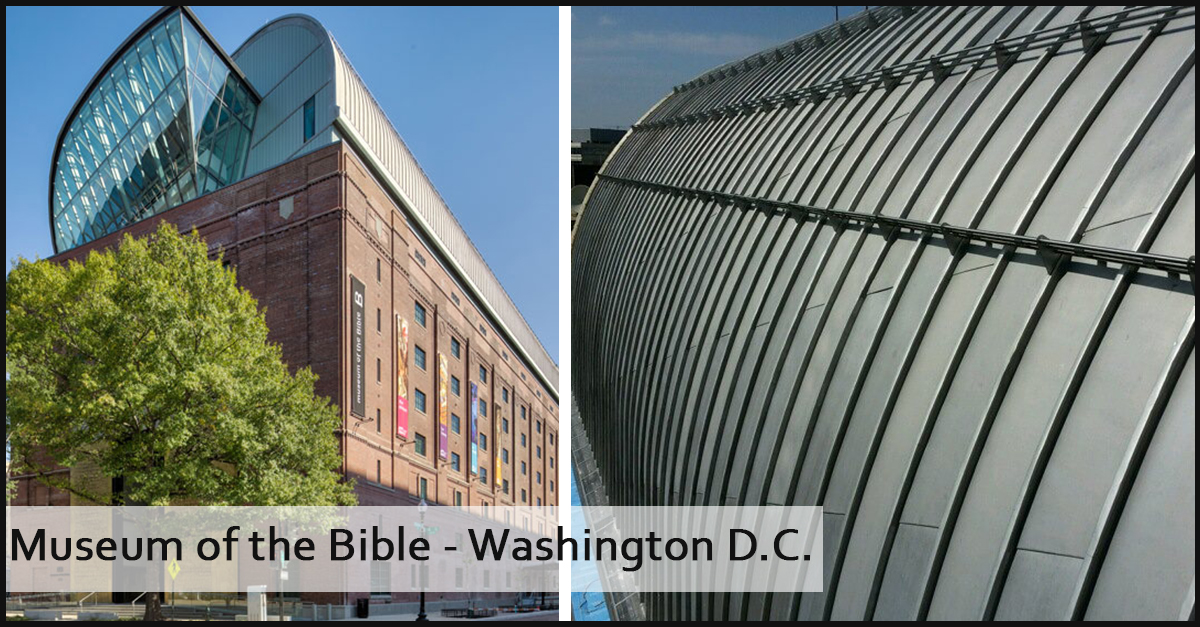
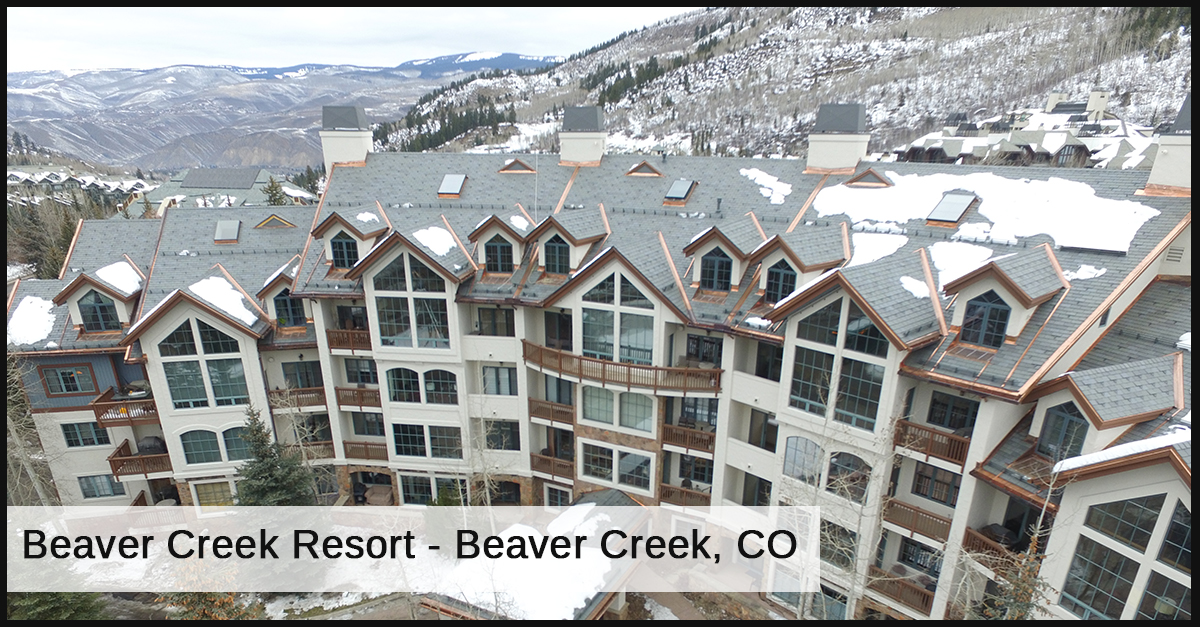
Given the weight and strength of the chosen snow guard system, the manufacturer can make recommendations. They can recommend pipe bracket spacing and whether one tier along the building’s eaves will adequately support the loads. Yes, you read that correctly. One tier of pipe-style snow guards is not always strong enough to manage a given snow load. Many Alpine pipe-style systems are installed in Washington, DC area. Typical snow fall amounts differ in the Colorado mountains, so multiple tiers of snow guards may be required. It’s easy to understand that this is a mathematical equation based on the particular properties of each project.

When to Choose Pad-Style Snow Guards
If you need to protect gutters, plumbing vents, shrubs and other replaceable items, like roof vents or lower roof surfaces, pad-style snow guards are often the easiest and most logical solutions. Look for a pad-style snow guard with a design that will hold or grip snow. Physical strength is important – just not as important as function. For example, if you were to install 1/4” diameter rebar, bent at a 90°angle with 4” standing vertically off the roof surface, each bar might withstand 800 pounds or more without bending. However, a 1/4” semi-round device will likely hold back very little snow volume.
Spread the Load over the Entire Surface
Look for pad-style snow guards that spread the load as evenly as possible over the entire roof surface. Pad and wire loop style snow guards are very appropriate for the Washington D.C. area, while they would likely not support the snow mass of more mountainous regions like the Rockies.
Think about the roofing material being installed. If you’re following my blog series about the evolution of snow guards beginning in the late 1800’s, this topic is discussed at great length. One of the key differences between snow guards that were used from the late 1800’s to the 1960’s is roofing material thickness (I know this is a broad comment since graduated thickness slate roofs, thick tiles, cedar hand-split shingles, etc. were around during that era).
Add Necessary Friction to Function as a Deterrent
The lion’s share of slate, asbestos, asphalt shingle, metal shingle and clay tile (although tile was thicker – 5/8” thick typical for clay slab shingles) were in the 1/4” thick range, or less. This notion is supported by the invention and subsequent copies and knockoffs of the E.W. Clark snow guard design from 1899. Generally speaking, if the snow guard is 1” taller than the thickness of the shingle it’s being installed on, and if the snow guards are installed in the proper quantities, they’ll add the necessary friction to function as a deterrent. Width is also important. It’s my opinion that a wider base (at least 1.5”) is better than something 1” or less (back to the rebar concept – I would agree that if enough rebar was used, they would work great).
Roofing Products Thicker than 1/4 Inch
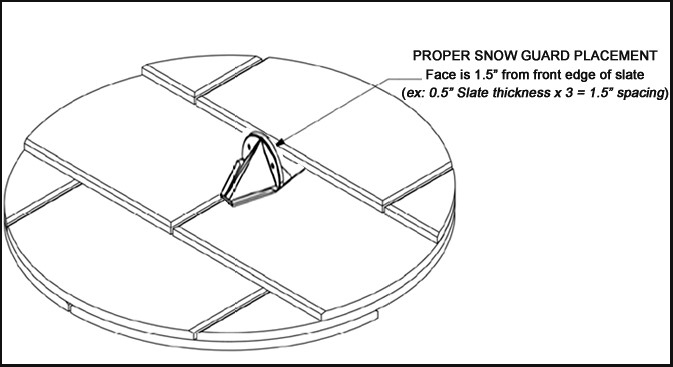
In today’s roofing market, there are a number of roofing products that are thicker than 1/4”, including multiple synthetic shingles that mimic thick slate, cedar hand-split shingles and tile. A typical concrete roof tile is 1” thick or thicker. If the snow guard you choose is not 1” taller than the thickness of the chosen tile, be sure the snow guard is set so that the head is a minimum of 2.5 times below the butt of the next vertical course of shingles (see example below). This will allow the slowly migrating mass to slump up over the butt of an upslope shingle course and still fully engage the face of your pad. Having said this, the preferred height of a pad-style snow guard would still be the thickness of the shingle plus a minimum of 1”.
Consider the Construction or Composition of the Roof Shingle
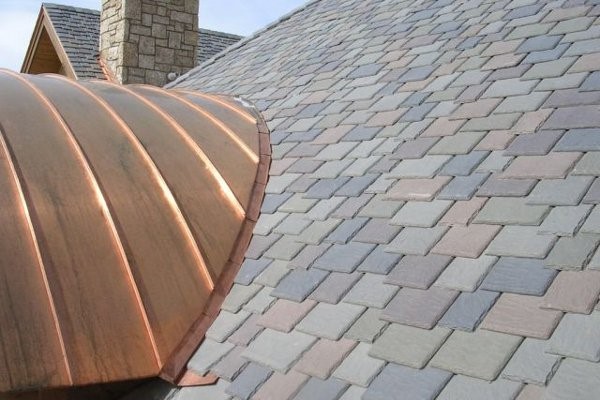
It’s also important to consider the construction or composition of the roof shingle itself. Cedar shingles are not permitted for use due to fire codes and have become very expensive in some areas. However, they have a very desired aesthetic appeal, which has opened the door for synthetic manufacturers to produce plastic and super compounds that compete on a number of levels (cost, speed of installation, longevity, etc.)
Which Snow Guard is Right for New Synthetic Roofing Materials
With natural cedar shingles the snow and ice stick to it and rarely slide off – this is not the case with some of the new synthetics. As you can imagine, snow and ice slide off the plastic surface of the synthetic. This is something of a new phenomenon that nobody had ever really thought about before. Sure, some of these new synthetics seem to be excellent products, and like any new roofing product, new issues are bound to spring up.
Which Snow Guard is Right for Solar Panels and Membrane Roofs
The principles of pipe-style versus pad-style snow guards apply, and my experience has taught me that frictionless surfaces like glass (solar panels), membrane (commercial products being used on sloped surfaces), and plastics should really utilize pipe-style systems around the base of the installation. If multiple tiers of pipe-style snow guards are recommended but not desired, consider supplementing the bottom tier of pipe-style snow guards with pad-style snow guards. The Alpine customer service staff can assist with these options and help answer your questions, just send us an email or give us a call at 888-766-4273 – that’s what we’re here for!
Brian Stearns
President & Founder, Alpine SnowGuards

We keep snow in its place
888.766.4273


Sign up to start using our Online Project Calculator for an immediate layout and project pricing!
Subscribe to our monthly newsletter and keep up on the latest industry and Alpine news, products and upcoming events!
Alpine SnowGuards designs, engineers, and manufactures snow management systems from our facilities in Morrisville, VT. We work closely with leading roofing contractors, engineering firms, developers, and roofing manufacturers to ensure we deliver quality products that do what we say they’ll do. Alpine SnowGuards can help a building qualify for LEED® credits.
(Images from: James Myers Co., Formula Roofing, Create Luck LV and Alpine SnowGuards’ Archives)